If your job can be taken by a hypothetical unskilled, non-English-speaking illegal immigrant or outsourced worker, I’m going to give you some bad advice.
I’m going to give you the same bad advice you gave millennials: stop whining, you’re not entitled to anything and nobody owes you a job.
I’m going to give you the same bad advice you gave minimum wage workers: stop being lazy. Get a skill. work harder and you’ll move up.
I’m going to give you the same bad advice you gave sexual assault victims: you should have made better choices and this wouldn’t have happened to you.
And when you find that this advice is not helpful or even true, then instead of attacking your fellow worker, the one who’s willing to work for less than a legal wage to feed his family, maybe you should go after the structures of power that allow and incentivize your employer’s choice to relocate your job.
Yesterday, I was trawling iTunes for a decent podcast about writing. After a while, I gave up, because 90% of them talked incessantly about “self-discipline,” “making writing a habit,” “getting your butt in the chair,” “getting yourself to write.” To me, that’s six flavors of fucked up.
Okay, yes—I see why we might want to “make writing a habit.” If we want to finish anything, we’ll have to write at least semi-regularly. In practical terms, I get it.
But maybe before we force our butts into chairs, we should ask why it’s so hard to “get” ourselves to write. We aren’t deranged; our brains say “I don’t want to do this” for a reason. We should take that reason seriously.
Most of us resist writing because it hurts and it’s hard. Well, you say, writing isn’t supposed to be easy—but there’s hard, and then there’s hard. For many of us, sitting down to write feels like being asked to solve a problem that is both urgent and unsolvable—“I have to, but it’s impossible, but I have to, but it’s impossible.” It feels fucking awful, so naturally we avoid it.
We can’t “make writing a habit,” then, until we make it less painful. Something we don’t just “get” ourselves to do.
The “make writing a habit” people are trying to do that, in their way. If you do something regularly, the theory goes, you stop dreading it with such special intensity because it just becomes a thing you do. But my god, if you’re still in that “dreading it” phase and someone tells you to “make writing a habit,” that sounds horrible.
So many of us already dismiss our own pain constantly. If we turn writing into another occasion for mute suffering, for numb and joyless endurance, we 1) will not write more, and 2) should not write more, because we should not intentionally hurt ourselves.
Seriously. If you want to write more, don’t ask, “how can I make myself write?” Ask, “why is writing so painful for me and how can I ease that pain?” Show some compassion for yourself. Forgive yourself for not being the person you wish you were and treat the person you are with some basic decency. Give yourself a fucking break for avoiding a thing that makes you feel awful.
Here’s what stops more people from writing than anything else: shame. That creeping, nagging sense of ‘should be,’ ‘should have been,’ and ‘if only I had…’ Shame lives in the body, it clenches our muscles when we sit at the keyboard, takes up valuable mental space with useless, repetitive conversations. Shame, and the resulting paralysis, are what happen when the whole world drills into you that you should be writing every day and you’re not.
The antidote, he says, is to treat yourself kindly:
For me, writing always begins with self-forgiveness. I don’t sit down and rush headlong into the blank page. I make coffee. I put on a song I like. I drink the coffee, listen to the song. I don’t write. Beginning with forgiveness revolutionizes the writing process, returns its being to a journey of creativity rather than an exercise in self-flagellation. I forgive myself for not sitting down to write sooner, for taking yesterday off, for living my life. That shame? I release it. My body unclenches; a new lightness takes over once that burden has floated off. There is room, now, for story, idea, life.
Writing has the potential to bring us so much joy. Why else would we wantto do it? But first we’ve got to unlearn the pain and dread and anxiety and shame attached to writing—not just so we can write more, but for our own sakes! Forget “making writing a habit”—how about “being less miserable”? That’s a worthy goal too!
Luckily, there are ways to do this. But before I get into them, please absorb this lesson: if you want to write, start by valuing your own well-being. Start by forgiving yourself. And listen to yourself when something hurts.
Honestly the best piece of advice I can give to younger girls trying to figure life out is to completely ignore men. I’m not being quirky or cute when I say that, I mean it seriously. Ignore men’s judgments of you, ignore their insincere compliments, ignore their half-assed romance. Focus on developing yourself. Practice your art, play sports, do theater, volunteer, spend time with your friends, but do not put substantial effort into pleasing men. They’ll be there for you to pursue when the time comes and if you want to. But nothing will waste your youth more than fighting for male acceptance.
Intimacy is beyond kisses and cuddles and sex. Intimacy is getting a headache and taking a nap, and waking up to your laundry folded and your partner rubbing your back. Intimacy is crying and yelling at night about your past to someone who listens and comforts you. Intimacy is watching shows in your pjs for hours and eating pizza together and being able to communicate love through holding hands. It’s never running out of conversation but doing it anyways to enjoy silence.
Ok so… just a general reminder to all fanfiction readers that if you can tell from the summary that you’re going to hate a story then don’t read that story. There are literally tens of thousands of other fic out there for you to read, plenty of them probably more to your taste.
Do not comment just to tell the author that you hate the concept and think they’re a sick person for writing it.
The most valuable thing I learned doing a Masters degree with depression, anxiety and ADHD was to change my “things I’m bad at” list to “things I can’t do on my own.” Stop thinking of them as things I could do if I tried hard enough, and accept that I can’t accomplish them by effort and willpower alone; they’re genuine neurocognitive deficits, and if I need to do the thing, then just like a blind person reading or a mobility impaired person going up a storey in a building, I need to find a different method.
I’m “bad at” working on long-term projects without an imminent deadline or someone breathing down my neck? Okay, let’s change that: I can’t work on long-term projects without an imminent deadline and someone breathing down my neck. So let’s create an imminent deadline and recruit neck-breathers. Find a sympathetic prof who will agree that 3 weeks before the due date they expect me to show them my preliminary notes and bibliography. Get a friend I trust to block off an hour to sit with me and keep asking, “Are you working on your project?” Write a blog post about my progress. Arrange to trade papers and proofread them with another student.
Accept your limitations and learn to leverage them, instead of buying the neurotypical fairytale that they’ll go away if you just try hard enough.
I needed this so much.
Very encouraging, especially helpful.
Do not teach your daughters to be ‘pretty.’
Do not entomb her in a pretty pink tower
and insist that only the degree of her physical appeal
may set her free.
Teach her to fight her way out,
to consume books and spit knowledge
to lesser boys who insist she is just beautiful
and nothing more.
Teach her to love her body
not to manipulate and put a price tag on herself
as a defined worth
she shall be immeasurable
she shall be more than this.
Do not let her break herself down
when the boy in kindergarden hits her
because he likes her.
What are you really teaching her?
Pain and love are not synonymous
neither are pretty and perfection.
Teach her to be kind
to be harsh
to be demure
to be wild
to be sensitive
to be thick-skinned
But good god,
Do not teach your daughters to be ‘pretty.’
Why thank you for asking. If you can’t afford my book, you can check it out from the library without any guilt.
Checking out library books in the U.S. helps me in two ways: I get a royalty from the book itself, and my publisher can have access to solid circulation numbers to let them know what demand looks like.
Checking out library books in the UK helps me out even more, as the UK has a snazzy royalty that happens each time you check out a book.
But more importantly, checking out books from your local library keeps the library alive. Public libraries need those circulation numbers to continue funding, and I can’t stress how strongly I believe that libraries are a crucial way to make stories and education available to everyone. If you can’t afford a book, check one out — such an act means that you’re helping lots of readers who can’t afford books, not just yourself.
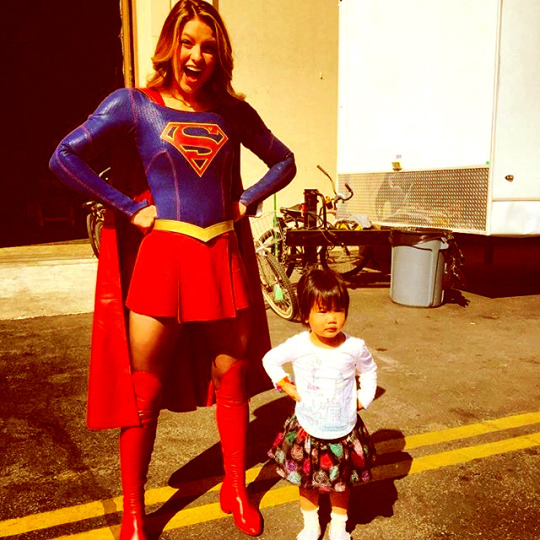
“I have had the privilege of meeting so many young girls that have visited set this season and I’m always blown away by their faces when they see the cape and the ’S’ and the whole costume and just how excited they are to be there. That is really moving and I always kind of… have to go to my trailer and cry a little bit.” [x]


 shealwaysreads